
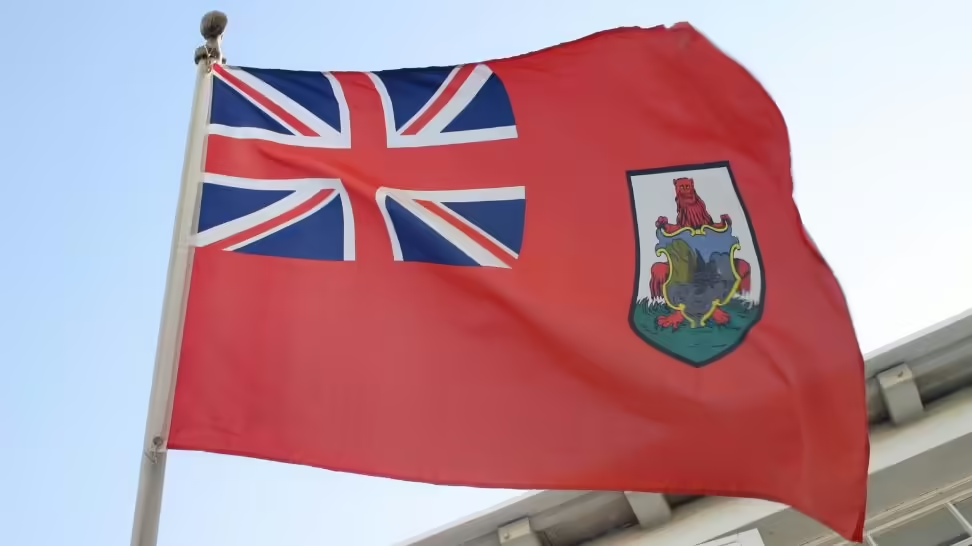
What Is a Bermuda Trust?
A Bermuda Trust is an offshore trust established under the laws of Bermuda, a UK territory off the East Coast of the United States. Bermuda has a stable financial center with a legal framework based on English common law and legislation designed to serve discerning investors and wealth managers worldwide.
Bermuda was the first offshore jurisdiction whitelisted by the Organization for Economic Cooperation and Development (OECD), demonstrating an adequate level of protection and compliance with international commitments.
Types of Bermuda Trusts
- Revocable Trust: Allows you to manage trust assets during your lifetime, with the trustee taking control upon death or incapacitation. Useful for estate planning but not typically used for asset protection.
- Charitable Trust: Designed to benefit a cause or non-profit organization rather than individual beneficiaries.
- Purpose Trust: Benefits a specific non-charitable objective such as preserving property, supporting research, or holding shares for a private company.
- Fixed Interest Trust: Beneficiaries receive predetermined distributions based on fixed entitlements, with the trustee distributing according to trust terms.
Benefits of a Bermuda Trust
- Tax Neutrality: No income taxes, corporate taxes, dividends taxes, capital gains taxes, or estate and inheritance taxes. This structure is guaranteed by the Bermuda government through at least 2035.
- Asset Protection: Bermuda Trusts can shield assets from creditor claims and lawsuits. Bermuda will generally not recognize a judgment from a foreign government against trust assets.
- Flexible Asset Types: You can place real estate, cash, cryptocurrency, financial instruments, intellectual property, personal property, and life insurance policies into a Bermuda Trust.
- Estate and Succession Planning: Create specific instructions for how assets will be managed and distributed to beneficiaries into perpetuity.
- Confidentiality: Subject to limited disclosure, with some trusts including nondisclosure clauses. Bermuda law makes it burdensome for foreign entities to access trust information.
Risks to Consider
Despite its advantages, a Bermuda Trust carries certain risks:
- Changing Regulatory Landscape: Current tax laws are guaranteed through 2035, but there are no guarantees beyond that.
- UK Transparency Pressure: UK jurisdictions, including Bermuda, face increasing pressure for transparency and cooperation in legal proceedings, which could erode asset protection advantages.
- Beneficiary Disputes: Trust disputes among beneficiaries over distributions, trustee actions, or accounting can arise.
- International Agreements: The Bermuda government claims to be a leader in transparency and allows "legitimate tax authorities" to obtain information, including the UK's National Crime Agency.
Bermuda Trust vs. Cook Islands Trust
While both are offshore trusts, the differences are significant for asset protection purposes:
- A Cook Islands Trust has more robust asset security features and stronger case law backing asset protection
- The Cook Islands has a shorter statute of limitations for fraudulent transfer claims
- Bermuda faces greater transparency pressure as a UK territory
- Cook Islands Trusts are generally considered the gold standard for clients prioritizing maximum asset protection
A Bermuda Trust may be appropriate for clients focused on estate and succession planning in a well-regulated environment, while a Cook Islands Trust is typically better for those prioritizing creditor protection.
Contact Blake Harris LawCosts Associated with Bermuda Trusts
Costs include:
- Legal fees for drafting trust documents
- Trustee fees and registration/filing fees
- Advisor fees and asset management costs
- Ongoing compliance and legal advice
Specific fees vary based on the complexity of the trust, the asset portfolio, and the level of administrative services required. Contact Blake Harris Law for detailed information.
Frequently Asked Questions
Is a Bermuda Trust right for everyone?
A Bermuda Trust serves a diverse group of individuals with varying goals. It may be most appropriate for those interested in estate planning in a well-regulated, tax-neutral environment. For maximum creditor protection, a Cook Islands Trust or Nevis Trust may be more suitable.
Do assets need to be in Bermuda?
No. Assets do not need to be physically located in Bermuda. However, U.S. real estate may not be wholly protected in the event of a domestic judgment.
What about privacy?
Bermuda Trusts offer confidentiality protections including nondisclosure clauses. However, the Bermuda government cooperates with legitimate tax authorities, and UK transparency initiatives may increase disclosure requirements over time.